
ISO 9001:2015 Certified Manufacturer
Precision Rubber-to-Metal Bonding Services
HTEI manufactures custom rubber-to-metal bonded components for applications requiring reliable bond integrity, dimensional control, and performance under demanding operating conditions.
From prototype development through production, HTEI works with a wide range of elastomers and metal substrates to meet customer drawings, specifications, and application requirements.
Substrate Bonding: Metals | Plastics | Composites | Glass
Home > Capabilities > Rubber-to-Metal Bonding
RUBBER-TO-METAL BONDING
Custom Bonded Components for Demanding Applications
Rubber-to-metal bonding combines an elastomer with a rigid metal substrate to create a single component capable of providing sealing, vibration isolation, fluid control, wear protection, or other application-specific functions.
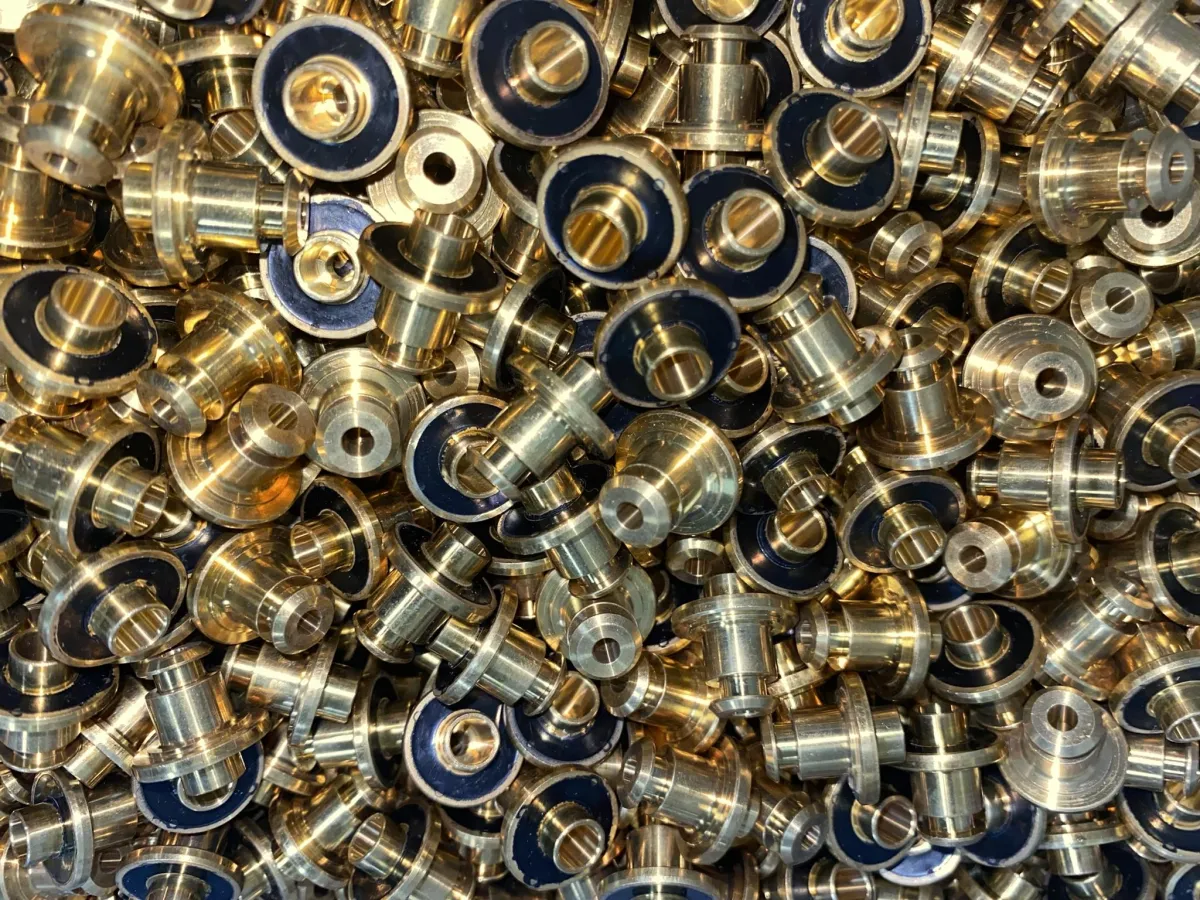
HTEI manufactures bonded components including poppets, seals, gaskets, rollers, valve components, vibration mounts, bushings, diaphragms, rubber-coated metal components, and custom rubber-to-metal assemblies.
BONDING PROCESS
How HTEI Creates a Rubber-to-Metal Bond
HTEI follows a structured process from initial design evaluation through production to ensure material compatibility, bonding performance, and repeatable manufacturing outcomes.
01
SUBSTRATE PREPARATION
Metal substrates are cleaned, degreased, and abrasively prepared to establish the surface condition required for bonding.
02
ADHESIVE SYSTEM
A two-coat adhesive system is applied, beginning with a metal-based adhesive followed by an elastomer-based adhesive.
03
MOLDING
The prepared substrate is placed into the mold, brought to the required temperature, and the elastomer is injected into the mold cavity.
04
BOND FORMATION
Under heat and pressure, the bonding process takes place as the elastomer cross-links to form the finished bonded component.
MATERIAL COMPATIBILITY
Elastomers and Metal Substrates
HTEI bonds a wide range of elastomers to metal substrates based on the performance requirements of the component and its operating environment.
Elastomers
NBR (Nitrile)
HNBR
EPDM
Silicone
Urethane
FKM (Viton®)
Butyl
FFKM
Neoprene
Natural / Gum Rubber
Vamac
Metal Substrates
Stainless Steel
Carbon Steel
Aluminum
Titanium
Brass
Bronze
Nickel Alloys / Superalloys
HTEI also has experience bonding elastomers to non-metal substrates, including PEEK, where application requirements call for alternative substrate materials.
Explore HTEI's full range of HTEI Materials and material selection considerations.
BONDED COMPONENT APPLICATIONS
Rubber-to-Metal Components Built for Functional Performance
HTEI manufactures rubber-to-metal bonded components for applications where the elastomer and metal substrate must function together as a single engineered component.
Components Manufactured
Poppets
Seals & Gaskets
Rollers
Valve Components
Vibration Mounts & Isolators
Bushings
Diaphragms
Rubber-Coated Metal Components
Custom Rubber-to-Metal Assemblies
Application Requirements
Sealing
Fluid & Pressure Control
Vibration Isolation & Damping
Shock Absorption
Motion Control
Wear & Abrasion Protection
Noise Reduction
Electrical Isolation / Insulation
Chemical & Fluid Containment
Structural Support / Mounting
View additional examples of HTEI Components manufactured by HTEI.
APPLICATION REQUIREMENTS
Engineered for Demanding Operating Conditions
HTEI has manufactured rubber-to-metal bonded components for applications involving demanding environmental, mechanical, and fluid-exposure conditions. Material selection and bonding requirements are evaluated based on the specific operating environment of the component.
Environmental
High & Low Temperatures
Temperature Cycling
Outdoor / Environmental Exposure
Vacuum
Fluid & Chemical
Oils & Lubricants
Fuels
Chemicals / Aggressive Fluids
High-Pressure Environments
Mechanical
Vibration
Shock / Impact
Abrasion & Wear
Compression
Repeated Cycling / Fatigue
QUALITY & VERIFICATION
Inspection and Verification of Bonded Components
Inspection and testing requirements are determined by the component, customer drawing, application, and acceptance criteria. HTEI uses dimensional, visual, bond, and functional verification methods as required for rubber-to-metal bonded components.
Visual & Dimensional
Visual Bond Inspection
Dimensional Inspection
Magnified / Enhanced Visual Inspection
Customer Drawing Requirements
Bond & Performance Testing
Bond-Strength Testing
Pull Testing
Peel Testing
Destructive Testing
Functional Testing
Application-Specific Verification
Leak Testing
Pressure Testing
Customer-Specific Inspection / Testing
Application-Specific Acceptance Criteria
Application-Specific Requirements: When dimensional or bonding requirements exceed standard acceptance criteria, HTEI can establish an appropriate inspection and verification process with the customer.
Learn more about HTEI's Quality and Inspection.
REPRESENTATIVE APPLICATION
FKM-to-Brass Bonded Poppet for Pressure Control
One example of HTEI's rubber-to-metal bonding experience is an FKM-to-brass poppet manufactured for an aerospace pressure-control valve. The bonded component is designed to control fluid flow while operating under high pressure, heat, and fluid-sealing requirements.
COMPONENT
Poppet
APPROX. SIZE
0.230 in.
SUBSTRATE
Brass
ELASTOMER
FKM
APPLICATION
Aerospace Pressure-Control Valve
Bonding Challenge
The application required a successful bond between the FKM elastomer and brass alloy while supporting the functional requirements of a high-pressure fluid-control component.
ENGINEERING SUPPORT
Support from Prototype Through Production
Rubber-to-metal bonding requirements can vary significantly with component geometry, substrate, elastomer, operating environment, and performance requirements. HTEI works with customers throughout development and manufacturing to establish an appropriate approach for the application.
Development Support
Material / Elastomer Selection
Bonding Process Recommendations
Design for Manufacturability (DFM)
Prototype Development
Manufacturing Support
Tooling Recommendations
Bond / Component Troubleshooting
Manufacturing to Customer Drawings & Specifications
Project-Specific Technical Assistance
Customer-Supplied Metal Components
HTEI can bond elastomers to customer-supplied metal components, subject to review and project requirements.
START A PROJECT
Discuss Your Rubber-to-Metal Bonding Application
Have a new bonded component, existing design, or challenging rubber-to-metal application? HTEI can review your requirements, drawings, materials, and operating conditions to help determine the appropriate manufacturing approach.
Phone
Hours
Monday - Friday, 8:00 am - 5:00 pm

© 2026 High Tech Elastomers Inc., All Rights Reserved | Site created by Webnine LLC