
Representative Components Manufactured for Industrial Applications
Precision Bonded Elastomer Components for Critical Applications
HTEI manufactures precision bonded elastomer components engineered for sealing, vibration isolation, fluid systems, and demanding industrial applications requiring tight tolerances and long-term reliability.
Components are engineered to meet material, dimensional, and performance requirements across a range of industrial applications.
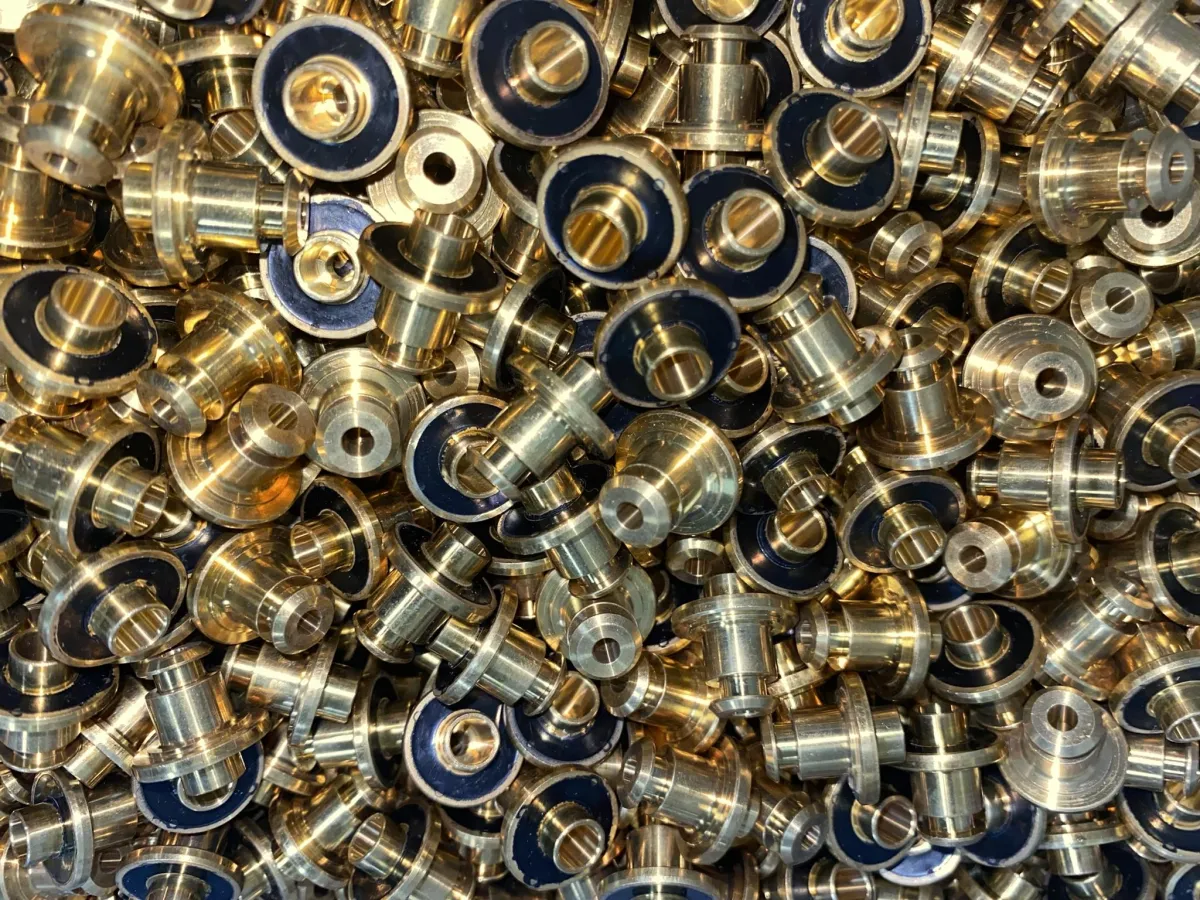
Substrate Bonding: Metals | Plastics | Composites | Glass
Types of Components Manufactured
HTEI manufactures bonded elastomer components for sealing, vibration control, fluid handling, and precision mechanical applications requiring controlled tolerances and material performance.
Seals & Gaskets
Bonded elastomer sealing components manufactured for pressure retention, environmental sealing, and dimensional control, including bonded seals, face seals, and precision gasket applications.
Valve & Flow Control Components
Bonded elastomer components manufactured for fluid regulation and mechanical reliability, including poppets, spool valves, armatures, and plunger pin assemblies.
Vibration Isolation Components
Components engineered to reduce vibration, absorb shock, and maintain system stability, including isolation mounts, dampers, and load-exposed assemblies.
Rollers & Rotational Components
Bonded elastomer rollers manufactured for controlled contact, wear resistance, and repeatable performance, including printing, feed, and drive roller applications.
Precision Bonded Components
Tight-tolerance elastomer-bonded components manufactured for assemblies requiring dimensional accuracy, repeatability, and controlled performance.
Custom Elastomer-Metal Assemblies
Application-specific bonded components designed for complex geometries, multi-material interfaces, and demanding operating environments.
Explore HTEI's rubber-to-metal bonding capabilities for custom bonded components.
Example Components
Representative examples of bonded elastomer components manufactured to meet application-specific performance, environmental, and dimensional requirements across multiple industries.
Bonded seals and precision gasket components
Vibration-isolating mounts for industrial and electronic equipment
Overmolded spool valves and flow-control components
Medical-grade platinum-cured silicone sealing components
Offset printing press rollers and feed rollers
Poppets, armatures, and plunger pins for valve assemblies
Elastomer-bonded components for downhole oil and gas systems
Precision rubber-to-metal rollers and bonded assemblies
Crash stops, actuators, stators, and magnetic latch components for disk drive systems
Custom elastomer-metal components for application-specific requirements
Engineering Considerations
Bonded elastomer component performance is influenced by material selection, substrate condition, environmental exposure, and mechanical loading. These factors are evaluated during design and manufacturing to ensure consistent performance and adhesion reliability.
Surface Preparation
Surface condition directly affects bond strength
Contaminants and oxide layers must be removed
Preparation method varies by substrate material
Material Compatibility
Elastomer selection must match environmental exposure
Chemical resistance and temperature range are evaluated
Material interaction affects long-term performance
Bond Interface Design
Bond area and geometry influence adhesion strength
Stress distribution must be considered in design
Interface design impacts durability under load
Tolerance Requirements
Bonded components must maintain dimensional accuracy
Tolerance stack-up is evaluated during design
Precision is critical for sealing and assembly fit
Environmental Exposure
Components may be exposed to heat, chemicals, or pressure
Material performance must remain stable over time
Application conditions define material and process selection
Mechanical Loading
Components may experience vibration, compression, or shear
Load conditions influence material selection and bonding method
Design must account for repeated stress cycles
Manufacturing Process
HTEI follows a structured process from initial design evaluation through production to ensure material compatibility, bonding performance, and repeatable manufacturing outcomes.
01
Consultation
• Define application requirements and performance conditions
• Evaluate materials, substrates, and operating environment
02
Design & Prototyping
• Develop bonded component design and material selection
• Produce prototypes for validation and testing
03
Inspection & Testing
• Verify dimensions, bonding integrity, and material performance
• Perform inspection and validation prior to production
04
Production
• Manufacture components under controlled processes
• Maintain repeatability and quality across production runs
Request a Quote or Submit Drawings
Submit application requirements, material specifications, and performance conditions for review.
HTEI evaluates bonding feasibility, material compatibility, and production requirements prior to manufacturing.
Phone
Hours
Monday - Friday, 8:00 am - 5:00 pm

© 2026 High Tech Elastomers Inc., All Rights Reserved | Site created by Webnine LLC