
Elastomer Compounds for Bonded Component Applications
Elastomer Materials for Bonded Components
HTEI works with a range of elastomer materials selected based on operating conditions, chemical exposure, temperature requirements, and mechanical performance.
Material selection is evaluated during design to ensure compatibility with substrates, bonding methods, and long-term application performance.
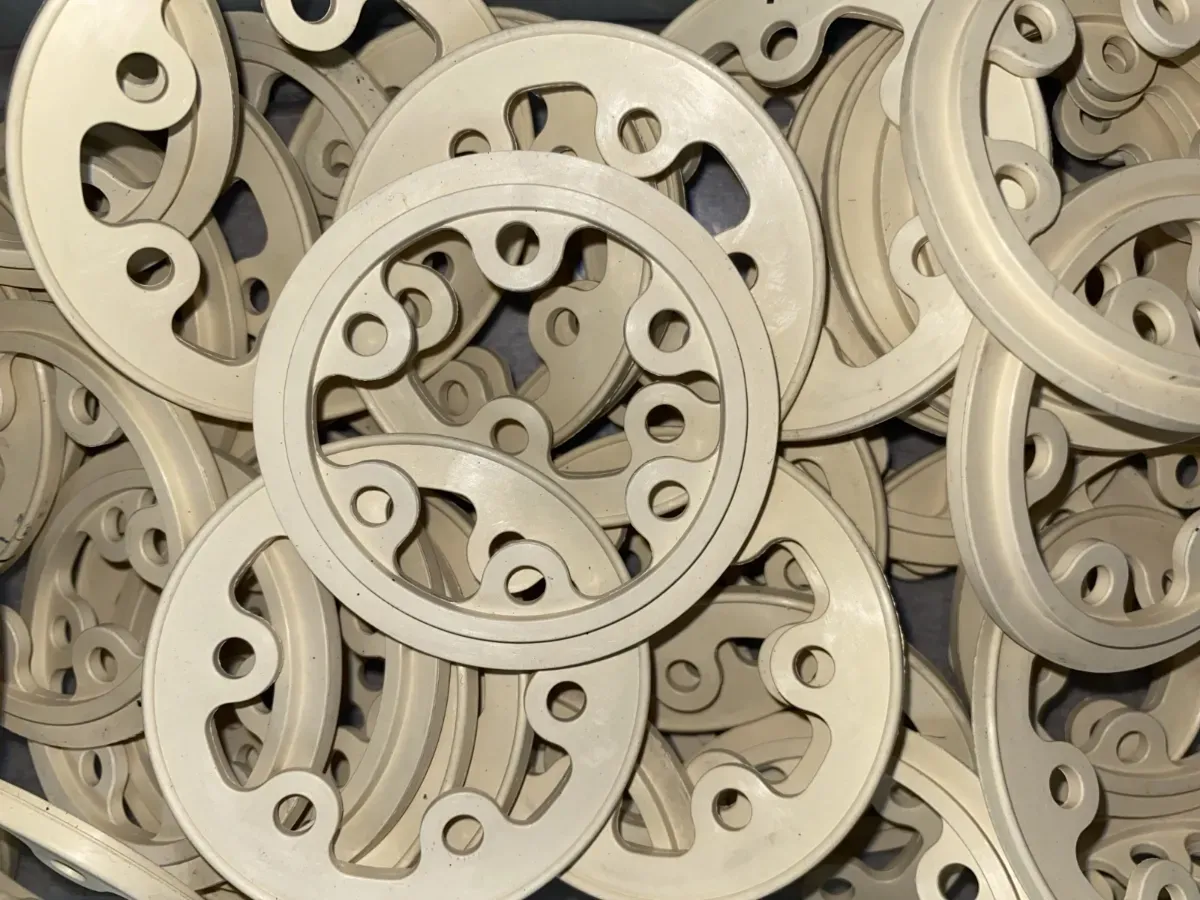
Substrate Bonding: Metals | Plastics | Composites | Glass
Common Elastomer Materials
HTEI works with a range of elastomer compounds selected based on temperature, chemical exposure, sealing requirements, and mechanical performance.
Material selection is evaluated based on application conditions and bonding requirements.
Silicone
Silicone is used in applications requiring stable performance across a wide temperature range, including sealing, medical, and high-temperature environments.
Temp Range: −80°F to 450°F
Excellent: Temperature stability, flexibility, weather resistance
Poor: Tear strength, abrasion resistance
Durometer: 20–80 Shore A
EPDM
EPDM is commonly used for outdoor and environmental sealing applications where resistance to weather, ozone, water, and steam is required.
Temp Range: −50°F to 300°F
Excellent: Weather, ozone, UV, water, steam
Poor: Petroleum oils and fuels
Durometer: 30–90 Shore A
Nitrile (NBR / HNBR)
Nitrile is widely used in fuel and fluid sealing systems where oil and hydrocarbon resistance are critical.
Temp Range: −40°F to 250°F (HNBR up to ~300°F)
Excellent: Oil, fuel, hydraulic fluids
Moderate: Ozone/weather (HNBR improved)
Durometer: 40–90 Shore A
FKM (Viton®)
FKM is used in high-temperature and chemically aggressive environments, including aerospace and automotive sealing applications.
Temp Range: −15°F to 400°F
Excellent: Fuels, chemicals, high temperature
Poor: Low-temperature flexibility
Durometer: 60–90 Shore A
FFKM
FFKM is selected for extreme environments requiring near-universal chemical resistance and high-temperature performance.
Temp Range: 0°F to 600°F
Exceptional: Chemical resistance (broad compatibility)
Excellent: High-temperature stability
Durometer: 70–90 Shore A
Urethane
Urethane is used in high-wear and load-bearing applications where abrasion resistance and durability are critical.
Temp Range: −60°F to 200°F
Excellent: Abrasion, tear strength, load-bearing
Good: Oil resistance
Durometer: 70 Shore A – 75 Shore D
Specialized Elastomer Materials
HTEI also works with additional elastomer compounds selected for specialized sealing, chemical resistance, and application-specific performance requirements.
Neoprene
Neoprene is a general-purpose material used in applications requiring a balance of oil, weather, and chemical resistance.
Temp Range: −40°F to 250°F
Balanced: Oil, weather, ozone resistance
Moderate: Chemical resistance
Durometer: 40–90 Shore A
Butyl
Butyl is used in applications requiring low gas permeability and strong resistance to moisture and chemical exposure.
Temp Range: −60°F to 250°F
Excellent: Gas and moisture resistance
Poor: Petroleum oils
Durometer: 40–80 Shore A
Natural Rubber
Natural rubber is used in dynamic applications where high elasticity, resilience, and mechanical performance are required.
Temp Range: −60°F to 180°F
Excellent: Tensile strength, elasticity
Poor: Oil, ozone, UV
Durometer: 30–90 Shore A
Medical-Grade & Platinum-Cured Silicone
This material is used in regulated and high-purity environments where consistency, cleanliness, and biocompatibility are required.
Temp Range: −80°F to 450°F
Excellent: Biocompatibility, purity, temperature stability
Compliant: FDA, USP Class VI (when specified)
Durometer: 20–80 Shore A
Material Selection Considerations
Selecting the proper elastomer requires evaluating the operating environment, substrate compatibility, and performance requirements of the finished component.
Temperature Range
Continuous temperature affects material stability
Thermal cycling impacts sealing and bond performance
Material selection must match environmental conditions
Chemical & Oil Exposure
Fluids, oils, and chemicals affect material compatibility
Resistance must match operating environment
Long-term exposure impacts durability and sealing performance
Mechanical Performance
Compression, vibration, and load conditions affect material behavior
Wear resistance and resilience vary by compound
Dynamic applications require appropriate mechanical properties
Bonding & Substrate Compatibility
Material selection must align with substrate type
Bonding method and surface condition affect adhesion
Material behavior influences long-term bond integrity
Explore HTEI's rubber-to-metal bonding capabilities for custom bonded components.
Request a Quote or Submit Drawings
Provide material requirements, operating conditions, and application details for review.
HTEI evaluates elastomer compatibility, bonding feasibility, and production requirements to support component design and manufacturing.
Phone
Hours
Monday - Friday, 8:00 am - 5:00 pm


© 2026 High Tech Elastomers Inc., All Rights Reserved | Site created by Webnine LLC